
Sample of Shopping List
Starting a shopping list from a good sample is faster than a blank page. Pick a sample list — a week of groceries, a pantry stock-up, party supplies, camping or back-to-school — untick what you already have, add your own items and rough prices, and print a clean list grouped by aisle, with a running total so you know roughly what you’ll spend.
- Free to use
- No sign-up
- Runs in your browser
Shopping list maker
Shopping List Printables
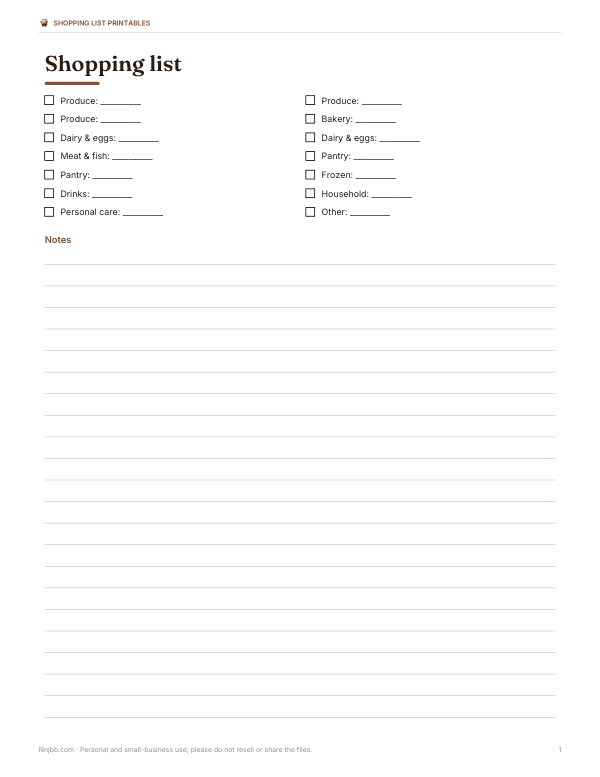
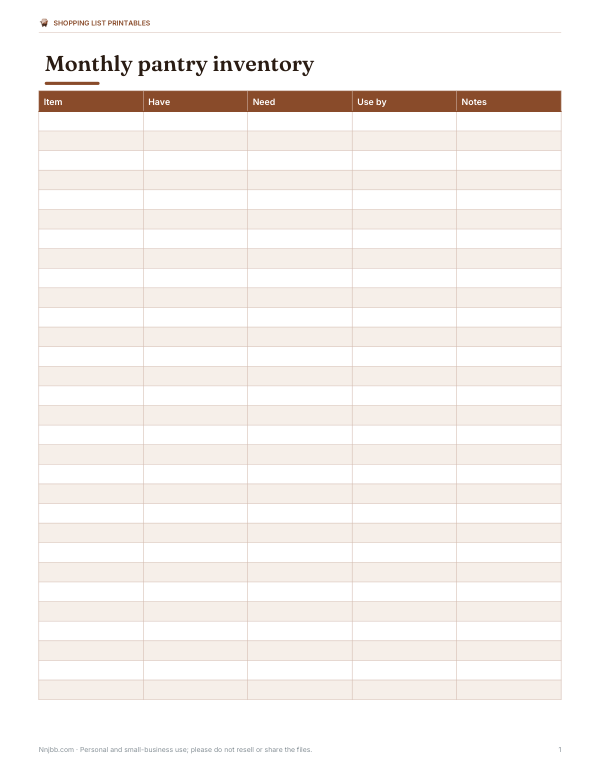
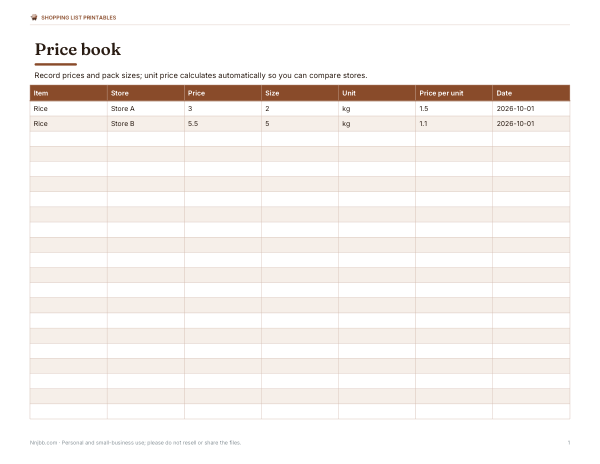
Printable shopping lists by store section, a monthly pantry inventory, a price book for comparing stores and a holiday shopping planner.
- Shopping list (PDF/DOCX)
- Pantry inventory (PDF/DOCX/XLSX)
- Price book (XLSX)
- Holiday planner (PDF/DOCX/XLSX)
Formats: PDF, DOCX, XLSX. Instant download after payment (link valid 72 hours, up to 5 downloads). AI-assisted: the templates were drafted with AI help and reviewed and laid out before publishing.
$5.00 USD, one-time 4 files · about $1.25 each
- Instant download
- 7-day refund
- Secure checkout by Stripe
7-day money-back guarantee. Full refund within 7 days of purchase, even after you download.
Free sample: Holiday Shopping Planner (PDF, 64 KB)
Full refund within 7 days — see the refund policy and license.
Free printables
Single sheets you can print right now, no sign-up. The full pack adds every sheet in one download plus the editable files.
 Printable Holiday Shopping List
Sample shopping lists
| Sample | What it covers | Good for |
|---|---|---|
| Weekly groceries | Fruit and veg, bread, dairy, protein, staples and a few household items | A couple or small household’s weekly shop |
| Pantry stock-up | Long-life staples, cleaning and paper goods | Monthly or bulk trips |
| Party for 12 | Snacks, food, drinks, ice and paper goods | Birthdays and gatherings |
| Weekend camping | Easy meals, snacks, water and campsite essentials | Two or three nights away |
| Back to school | Stationery, bag and lunch gear | Start of term |
Prices in the samples are rough placeholders to show how the total works — replace them with your own store’s prices.
How to use the list maker
- Choose a sample to start from, or a blank list.
- Untick anything you already have at home.
- Add your own items with the store section and an optional price.
- Watch the estimated total update as you go.
- Print the list (grouped by section, two columns) or copy it into a notes app.
- Your list is saved in this browser, so it’s there next time.
Why group by store section?
Grouping items by aisle — produce, bakery, dairy, meat, pantry, frozen, household — means you walk through the store once instead of doubling back, which saves time and reduces impulse buys. If you shop at the same store every week, order the sections to match its layout.
Worked example
The weekly groceries sample has 21 items with placeholder prices adding up to $80.50. Untick the coffee, rice and washing-up liquid you already have and the total drops by $12 to $68.50; add olive oil at $7 and it becomes $75.50. The printed list shows only the ticked items, grouped by section, with prices beside them.
Meal-based lists
The most efficient lists come from a meal plan: decide the week’s dinners, write down every ingredient, then add breakfasts, lunches and snacks. Check what you already have and untick it. Planning around a few shared ingredients — a bag of peppers used in two dinners, a chicken used for a roast and then sandwiches — means less waste and a lower total.
Tips for a cheaper shop
- Check the fridge, freezer and cupboards before you write the list.
- Plan meals first, then list ingredients.
- Stick to the list and set a budget before you go.
- Compare unit prices (per kg or per litre), not pack prices.
- Buy store brands for staples.
- Don’t shop hungry.
Building your own master list
After a few weeks, turn your regular shop into a master list: every item you buy often, grouped by section. Each week, start from the master list and untick what you don’t need. Many households find that 80% of their shopping is the same most weeks, so a master list cuts planning to a couple of minutes and keeps staples from running out.
Shopping with others
- Share one list so nobody buys duplicates — copy it into a shared note or messaging chat.
- Mark items that must be a specific brand or size.
- Split the list by store section if two people shop together.
- Keep a running “we’re nearly out” note on the fridge and add those items first.
Estimating a food budget
A simple way to set a budget is to track four weeks of real shopping, then average it. The estimated total on this list helps you plan before you go: if the total is higher than your budget, swap to cheaper alternatives or postpone non-essentials before you reach the checkout.
Lists for special situations
- New home: cleaning supplies, bin bags, toilet paper, light bulbs, basic groceries.
- New baby: nappies/diapers, wipes, formula if used, laundry detergent for sensitive skin.
- Holiday meal: plan by dish, and buy non-perishables a week early.
- Emergency kit: water, non-perishable food, torch, batteries, first aid supplies.
Privacy
Your list is stored only in this browser’s local storage. It isn’t uploaded and nobody else can see it; clearing browser data removes it.
Printable pack
The optional pack includes printable shopping lists by store section, a monthly pantry inventory, a price book for comparing stores and a Christmas and holiday shopping planner. The list maker above is free.
AI-assisted content
This page was drafted with AI assistance and reviewed before publishing. Sample prices are placeholders, not current prices.
Frequently asked questions
What should be on a basic shopping list?
Fruit and vegetables, bread, dairy and eggs, a protein, pantry staples and household basics.
How do I organise a shopping list?
Group items by store section in the order you walk the aisles.
Can I estimate my total?
Yes, add prices and the list totals the items you still need.
Is my list saved?
Yes, in this browser on this device.
Can I print it?
Yes, in two columns grouped by section with checkboxes.
Are the prices real?
No, they are placeholders; enter your own.
Can I use it on my phone?
Yes — tick items as you shop; the list stays saved in your phone’s browser.
What are the most forgotten items?
Staples like milk, bread, toilet paper, bin bags and cooking oil — keep them on your master list.
How can I stop impulse buys?
Shop with a list and a budget, eat before you go, and avoid the aisles you don’t need.
Can I switch between samples?
Yes, but choosing a new sample replaces the current list, so copy or print it first.
Does it work for any store?
Yes — the sections are general store areas; put anything that doesn’t fit under Other.